Where the Light Goes Down: Field Notes on Sunset in Oceanside
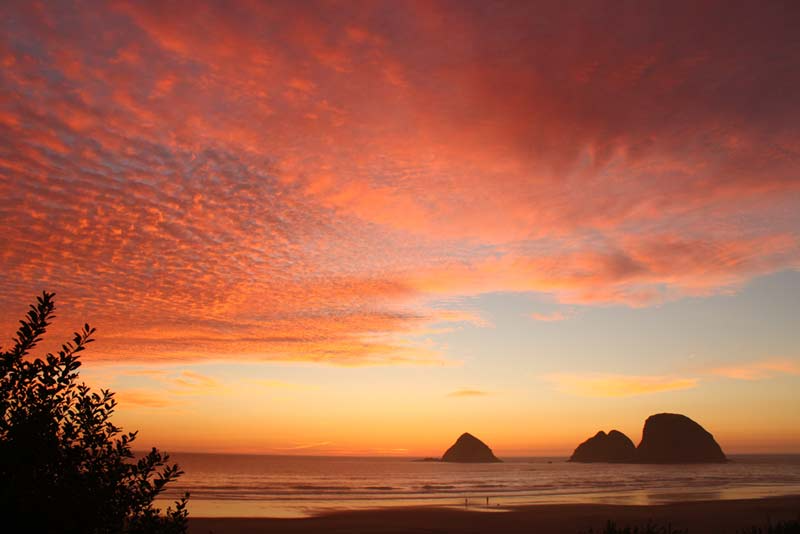
The best evenings in Oceanside begin about an hour before the sun reaches the water. The sea turns from green-gray to pewter, the wind changes its mind, and the offshore rocks lose their daytime detail. These are field notes from that hour: where to stand, what the light does to Three Arch Rocks, and how to tell early which evenings are worth the walk down to the sand.
Three Arch Rocks and the Light That Leaves Them
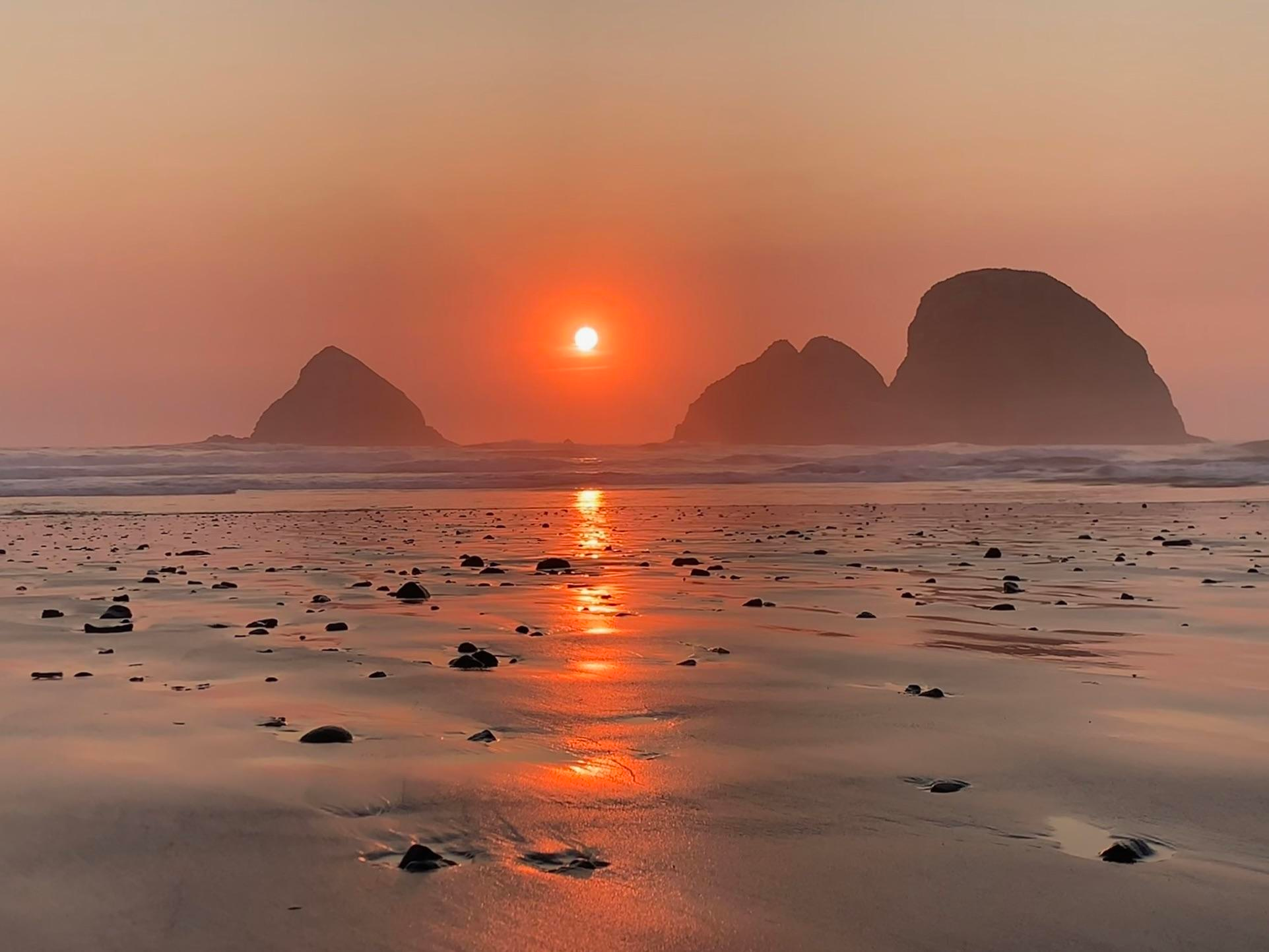
All day, Three Arch Rocks are a pale-capped cluster of islands crowded with seabirds. By dusk they flatten into a dark cutout against a brightening sky, and the whole beach seems to arrange itself around them.
Silhouettes Through the Seasons
The sun’s setting point swings across the horizon through the year. In summer it drops well north of the rocks, leaving them in sidelight with gold along one flank. Winter pushes it south, and the rocks stand off to one side while a long pink wash spreads behind them. Spring and autumn bring the sun closest to their line, and that’s when the edges sharpen into clean silhouette. None of these is the right season. Each gives you a different photograph of the same stone, which is a good reason to come back more than once.
The Arches, Backlit
The refuge is closed to visitors, and that distance is part of the picture. You’re looking at a place no one walks, and the light seems to respect it. The upper faces hold the last warmth while the bases sink into shadow. When the sun sits low and directly behind, the openings that give the rocks their name glow like coals, briefly, then go dark. Binoculars help here, and so does patience, because the effect lasts only a few minutes and rarely repeats exactly.
Where to Stand: Beach, Point, and Coast
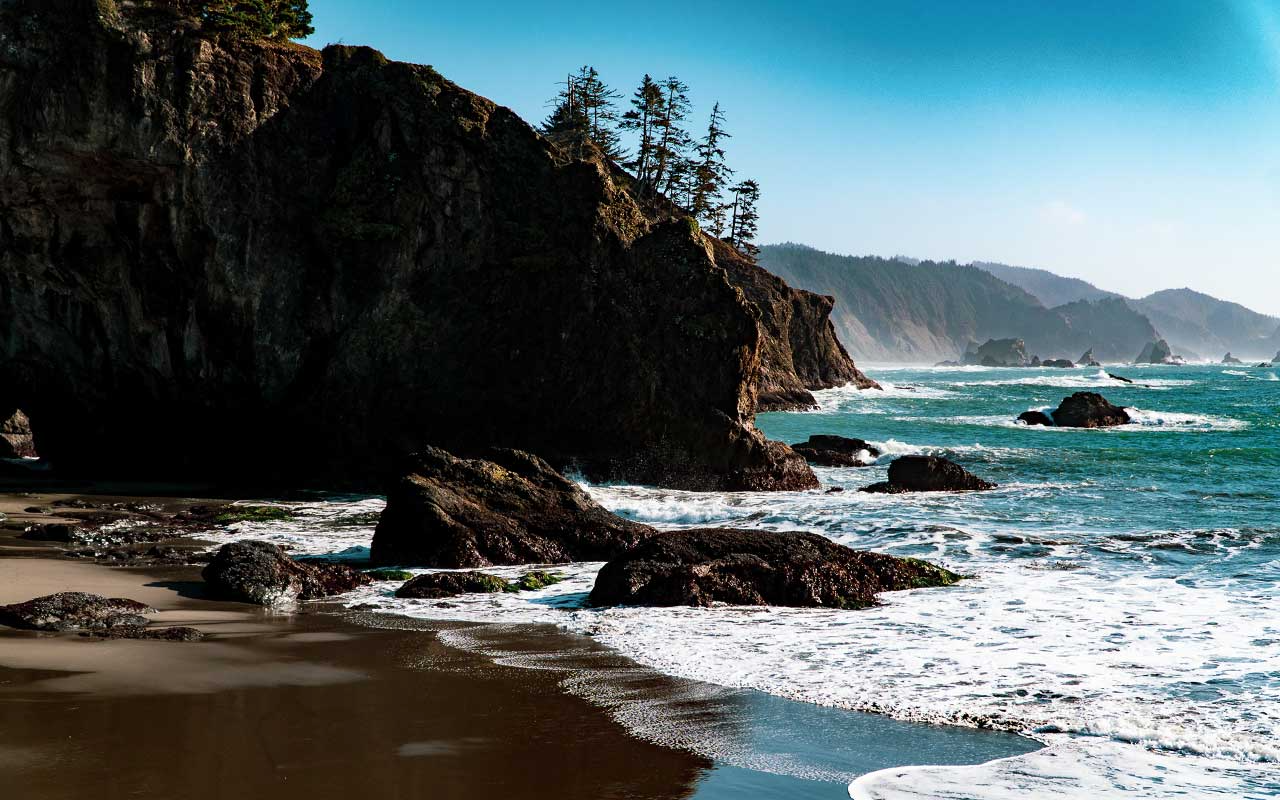
Three vantage points cover most evenings, and each frames the rocks differently. The beach puts you at water level, the headland lifts you above it, and the wider coast shrinks the rocks to a small mark on a very large sea.
The Beach at Low Tide
Walk to the middle of the sand in front of the village, where the rocks line up and nothing breaks the horizon. A falling tide an hour or so before sunset leaves a thin sheet of water over the beach, and the sky doubles itself at your feet. Stand at the water’s edge and let your eyes adjust. The sound changes as you do, from the dry hiss of wind over sand to the heavier, slower rhythm of the surf. Keep an eye on the waves, because they don’t announce themselves.
Maxwell Point and the Headlands
At the south end of the beach, Maxwell Point gives you height. From up top the colors stack in bands: a white thread at the horizon, then orange, rose, and a blue that deepens as it climbs. Wear shoes with grip, go up early, and head down while there’s still sky left to see your feet. With a car and an hour to spare, the headlands north and south of town change the angle again. From higher ground the rocks become a small dark cluster and the Pacific fills the frame. The drama shifts from subject to scale, and the crowds thin out.
Reading the Evening Before It Happens
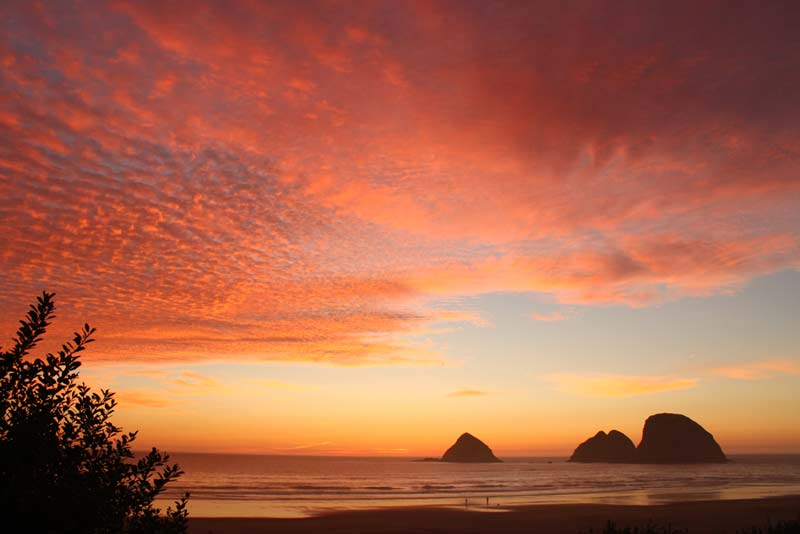
A good sunset is mostly decided hours earlier, by cloud, wind, and tide. Learning to read those three turns a lucky evening into a predictable one, and saves you a cold walk on the wrong night.
Cloud, Fog, and Wind
A completely clear sky is pleasant but flat, because the light needs something to catch. Look for thin, scattered high cloud, or a clearing band after a front has passed. A heavy bank sitting right on the horizon will swallow the sun early. Marine fog is the main risk. If a gray wall sits offshore by mid-afternoon, it will probably hold, though sometimes it lifts in the last twenty minutes and leaves one glowing band beneath the cloud. A steady wind makes the beach loud, cold, and gritty.
Timing, Kit, and the Afterglow
Arrive forty-five minutes before the listed sunset and stay twenty minutes after, because the afterglow is often the better half. Bring more layers than seems sensible, plus a thermos, binoculars, a headlamp, and a tripod if you photograph. Then turn around. Twenty minutes after sunset, a pink band rises over the eastern hills above a blue-gray shadow, the Earth’s own shadow climbing the sky. White cloud turns peach, then rose, then ash, and the beach goes quiet.
There’s another way to see all of this, and it’s worth saying plainly. On the coldest, windiest, or wettest evenings, the best viewpoint isn’t the beach or the headland. It’s a window, with a warm room behind you and the glass framing the rocks like a still photograph. You see the same light move through the same colors and miss only the wind and the crowd. Sometimes the best viewpoint is simply the one where you can stay the longest.
Ready to Experience the Oregon Coast?
Book your stay at Three Arch Inn and discover the magic of Oceanside for yourself.