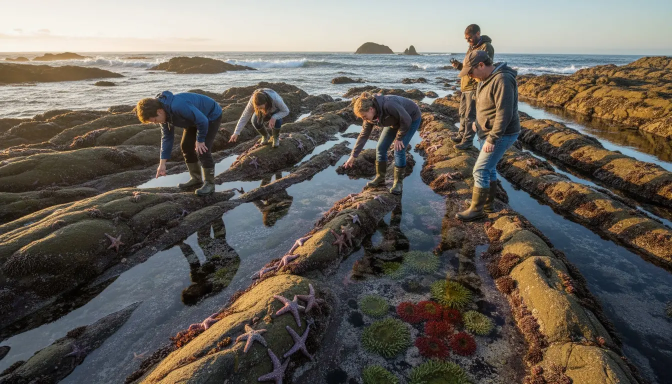
Tide Pools and Low-Tide Walks Near Oceanside
There is a particular hush at the bottom of a very low tide. The surf moves farther out than you expected, the sand turns glossy, and rock that has been underwater all week stands in the open air, dripping. This guide is for walking out into that hour near Oceanside: how to know when it’s coming, what you’re likely to find, and how to look without leaving a mark.
When the Ocean Pulls Back
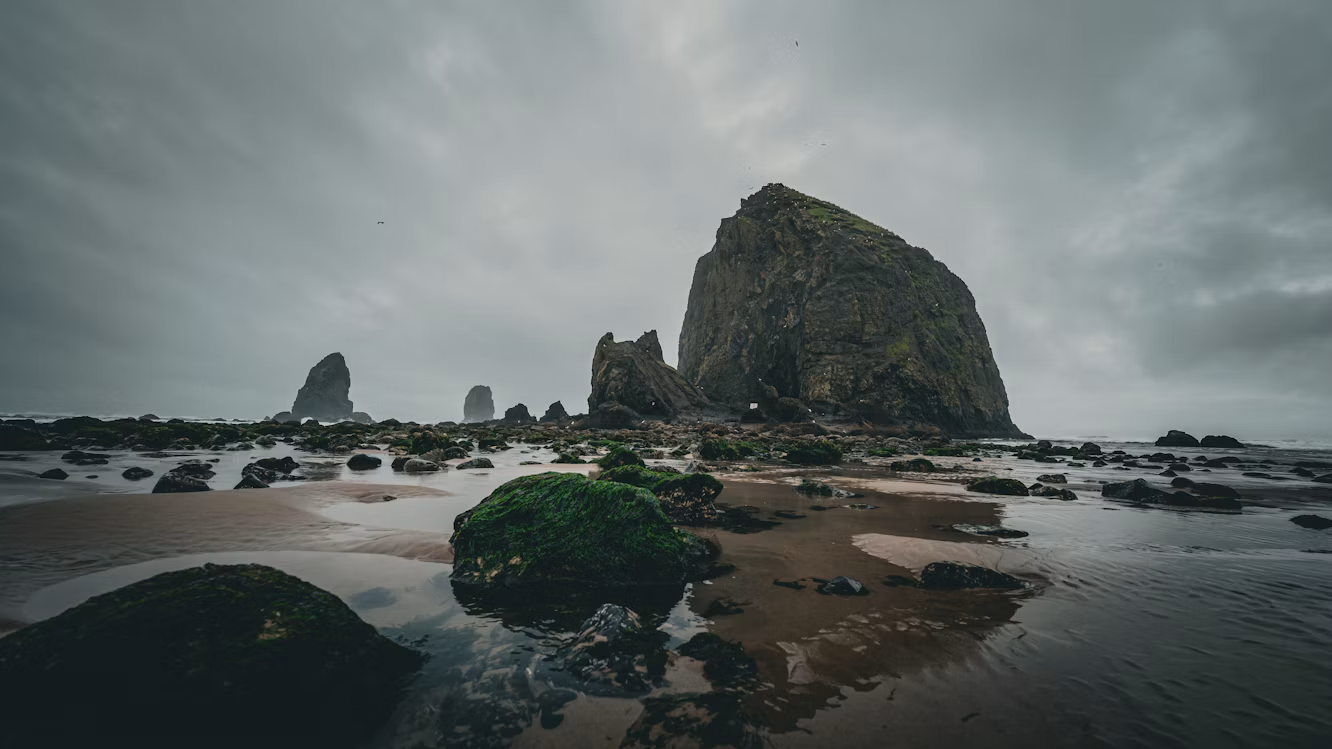
A low tide is less an event than a door left briefly open. For an hour or two the shoreline becomes a different place, and the people who see it best are usually the ones who arrive early and move slowly.
Reading the Tide Chart
A tide chart looks like a wave drawn on graph paper, and it’s easier than it appears. Find the low tide for your day and read its height. Anything near zero feet is workable. A negative number, called a minus tide, pulls the water far enough back to uncover the richest pools. Minus tides cluster around the new and full moons, so check those weeks first. Then look at the time. Plan to arrive an hour before the lowest point and leave an hour after, when the water starts to return. Low tides don’t always fall in daylight, so scan the chart for days when the lowest point lands in the morning or afternoon. Use a tide table for the nearest station, and treat the predicted time as a guide rather than a promise.
Choosing Your Spot
Pools form where there is rock, so look for rocky stretches rather than open sand. The ends of a beach, the base of a headland, and the shelves of stone that appear as the water drops are all good places to begin. Sheltered corners, where the swell is softer, tend to hold calmer pools and give you more time to look. Conditions change with the season, the swell, and the tide, so read the day before you commit. If waves are still washing hard around the base of the rocks, wait for a calmer day. Look for posted signs, and if a route looks like it will close as the water returns, choose another. A short walk on safe ground beats a long wade back.
A World Held in a Few Inches of Water
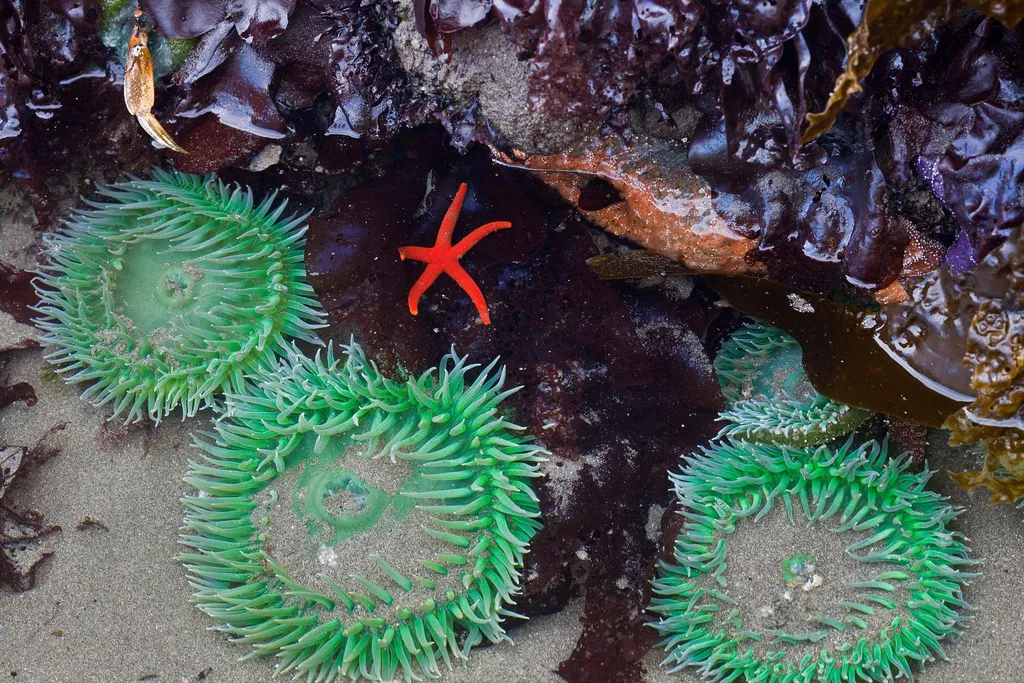
Once the water has gone, a pool becomes a small, self-contained neighborhood. Kneel beside one, wait a minute for the surface to settle, and it begins to show you who lives there.
Anemones and Sea Stars
Giant green anemones are the easiest to spot, soft and bright, with tentacles that close around anything that brushes them. Please resist the urge. The tentacles pick up bits of sand and shell, and every touch costs the animal energy. Smaller aggregating anemones often carpet the rock in clusters, their sand-flecked skin acting as camouflage. Sea stars cling to rock in the lower zones, purple, orange, or mottled brown, often wedged in crevices or sitting among mussels. Their numbers have suffered in recent years from wasting disease, so each one deserves a quiet look rather than a lift. Never pull one from its rock. They hold on harder than you’d think, and that grip is how they feed and survive.
Mussels, Hermit Crabs, and Small Movers
Mussel beds form dark, crowded bands higher on the rock, with barnacles crusting the stone beside them. It’s tempting to step where the surface looks flat, but those crowds are living communities, and the shells are sharp underfoot. Aim for bare rock or sand and let the mussels stay put. The small movers reward patience. A hermit crab shuffles across the pool floor in a borrowed shell, a limpet sits motionless until the tide returns, and a tiny fish darts beneath the weed. Keep your shadow off the water, stay still for a full minute, and the pool goes back to its business.
Walking Gently, Walking Safely
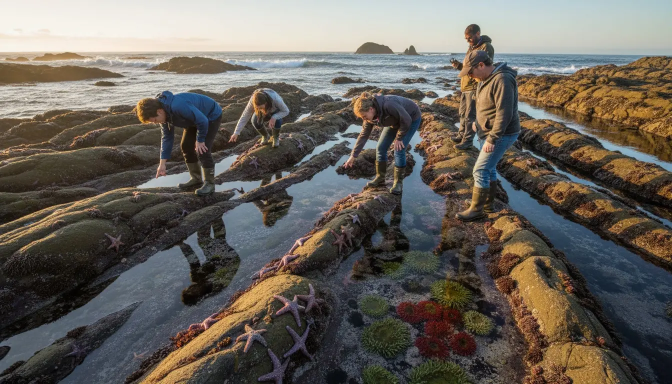
Tide pooling asks very little: sturdy shoes, slow feet, and a willingness to look rather than take. Most of what keeps the pools healthy comes down to a few simple habits.
Leaving the Pools as You Found Them
Wet your hands before touching anything, and touch only when you must, with a single finger. Skip lotion and sunscreen on your hands, since the residue washes into the pool. If you turn over a rock to look beneath it, set it back exactly as it was, because the animals living there depend on its shade and moisture. Collecting rules vary, so the safest approach is to leave every shell and creature where it is and take only photographs. Stay on bare rock and sand where you can, keep dogs and small children close, and carry out whatever you carry in. A pool that looks untouched is a pool that is working, and it’s what the next visitor will hope to find.
Sneaker Waves, Slick Rock, and the Turning Tide
This coast is beautiful and unforgiving. Sneaker waves, sudden surges much larger than the ones before them, can sweep over sand and rock without warning. Never turn your back to the ocean for long, stay off wet rocks near the surf, and keep clear of drifting logs, which can roll. Algae and barnacles make footing treacherous, so wear shoes with real grip and move deliberately. Watch the clock as closely as the pools. The tide turns quietly, and a route that was dry when you walked out can close behind you. Note where you came in, keep an eye on the water at your back, and head in as soon as it starts to rise. Go with a companion, tell someone your plan, and check the forecast and swell before you leave.
The best tide pool visits end the way they begin, quietly. You walk back across sand that was seafloor an hour ago, and behind you the water slides in over the rocks and closes the pools one by one. By evening the whole hidden world is covered again, as if it had never been open. Come back on the next low tide, and it will be a little different, which is the best reason to return.
Ready to Experience the Oregon Coast?
Book your stay at Three Arch Inn and discover the magic of Oceanside for yourself.